




Specialized Adhesive Labels 2: Cryogenic Labels - Guardians of the Cold Chain "Lifeline"
In our previous discussion, we explored how specialized labels conquer the harsh, sun-scorched world of outdoor environments. Today, we turn to the opposite extreme: the frigid, meticulously controlled world of the cold chain. For industries where temperature is synonymous with safety and efficacy—such as pharmaceuticals, biotechnology, and high-value food logistics—a label's failure is not an option. It can break the critical link of traceability, compromise product integrity, and risk public health. This is where Cryogenic or Low-Temperature Resistant Labels step in, engineered to perform where standard labels would catastrophically fail.
The Cold Chain Challenge: More Than Just "Being Cold"
The cold chain is a continuous, temperature-controlled supply chain. Its environments are not simply statically cold; they are dynamic and punishing for adhesive materials:
-
Extreme & Sustained Low Temperatures: Labels must adhere and remain functional in deep freeze conditions, commonly at -20°C, -40°C, -80°C, or even in liquid nitrogen vapor phases (-196°C).
-
Condensation & Frost: Moving products from a -80°C freezer to a warmer packing area causes immediate, heavy condensation and frost formation. Standard labels will instantly lift, and their adhesives can turn to a useless, crystallized slurry.
-
Thermal Cycling & Shock: Products undergo repeated cycles of freezing and temporary warming during transit, quality control, and storage. This expansion and contraction stress the bond between label and container.
-
Chemical Exposure: Labels may come into contact with liquid nitrogen, dry ice (CO2), sterilizing agents like vaporized hydrogen peroxide (VHP), or isopropyl alcohol used for decontamination.
A standard paper or vinyl label becomes brittle, its adhesive fails, and it peels off. The printed information can be obliterated by moisture or become unreadable. The result is an "orphaned" product with no identity—a severe violation of Good Distribution Practice (GDP) and a direct threat to patient safety in pharma.

The Engineering Solution: Materials Built for the Deep Freeze
Cryogenic labels are not simply "cold-rated" versions of standard products. They are systems engineered from specific materials designed to maintain integrity under extreme duress.
-
The Facestock – Flexibility at Extreme Lows: The face material must remain flexible, not brittle. Specialized polyethylene (PE) or polypropylene (PP) films are often used. These synthetics retain their toughness and resistance to cracking even when frozen to extremely low temperatures. For ultra-low temp applications, specially formulated cryogenic polyesters are employed.
-
The Adhesive – The Heart of Performance: This is the most critical component. Standard acrylic or rubber-based adhesives harden, lose tack, and fail. Cryogenic labels use specially formulated, high-tack acrylic or synthetic rubber adhesives. These adhesives are designed to:
-
Maintain initial "wet-out" and adhesion on cold surfaces.
-
Remain pliable (have a low glass transition temperature, Tg) to resist crystallization.
-
Form a permanent bond that withstands thermal cycling and condensation without lifting at the edges (a common failure point known as "edge-lift").
-
-
The Ink & Print Method – Legibility is Paramount: Printing must be as durable as the label itself. Thermal-transfer printing with high-quality wax-resin or full-resin ribbons is the gold standard. The ink from these ribbons is fused into the facestock material, creating a smear-proof, chemical-resistant, and moisture-proof image that won't crack or flake off when the label flexes in the cold. Laser-compatible materials are also available for direct marking.
Core Application Case: Ensuring Vaccine Integrity from Lab to Arm
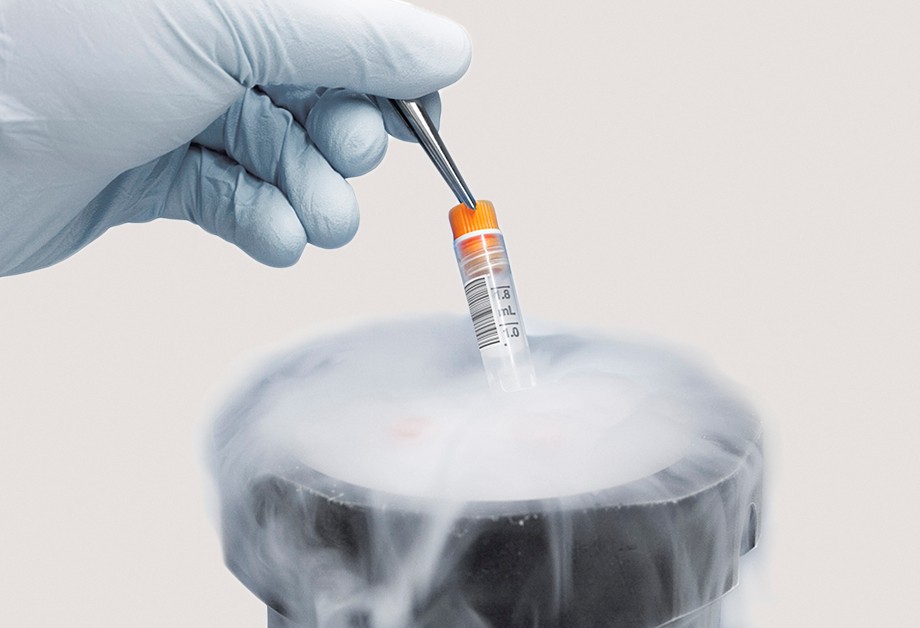
Consider the non-negotiable journey of a life-saving vaccine. Vials are filled, stored in ultra-low temperature freezers, packed in insulated polypropylene (PP) shippers with dry ice, transported across continents, stored at local distribution centers, and finally delivered to clinics. Traceability of every single vial, batch, and lot number is legally mandated and morally imperative.
The Challenge: A leading biotechnology company faced label failure on their vaccine transport containers. Standard labels would peel off the PP shippers after exposure to dry ice and condensation, creating a traceability black hole.
The Solution: Implementation of a cryogenic-grade polypropylene label with a permanent, low-temperature acrylic adhesive, printed with a full-resin thermal transfer ribbon.
The Result: The labels were applied directly to the cold, often frosted, PP containers. Throughout the transcontinental journey, with multiple handling cycles and dramatic temperature shifts, the labels performed flawlessly:
-
No Edge-Lift or Peeling: The adhesive maintained a tenacious, conformal bond to the container surface.
-
No Information Degradation: The printed text, barcodes, and 2D Data Matrix codes remained perfectly scannable and human-readable.
-
End-to-End Traceability: Every container was reliably identified at every checkpoint, ensuring strict chain of custody, maintaining regulatory compliance (e.g., FDA DSCSA, EU Falsified Medicines Directive), and—most importantly—guaranteeing that the vaccine administered was authentic and handled correctly.
Conclusion: The Vital Link in a Critical Chain
In the cold chain, information is as vital as temperature. A cryogenic label is the durable, reliable vessel for that information. It is a mission-critical component that bridges the physical product to its digital history (its ePedigree), ensuring safety, compliance, and trust.
This specialized solution demonstrates that true labeling performance is defined by the ability to survive the specific journey of the product. From blistering heat to deep freeze, the right label acts as an unwavering guardian of identity.